On this page
- How far apart are the two regions, in travel terms?
- How do you reach each one?
- How does the diving differ?
- Which Wakatobi sites do guides name, and who are they for?
- Why do species counts for Wakatobi differ so widely?
- How do the calmer months compare?
- What do published fares look like in each?
- Can one trip cover both?
- Which region fits which trip?
- Which published prices did we check?
- What other questions come up when choosing a region?
- Which sources support this page?
- How do I reach the desk?
By Sulawesi Liveaboard Editorial Desk
Sourced figures: prices in the table carry their source and check month. Published fares are not our offers, and fees change.
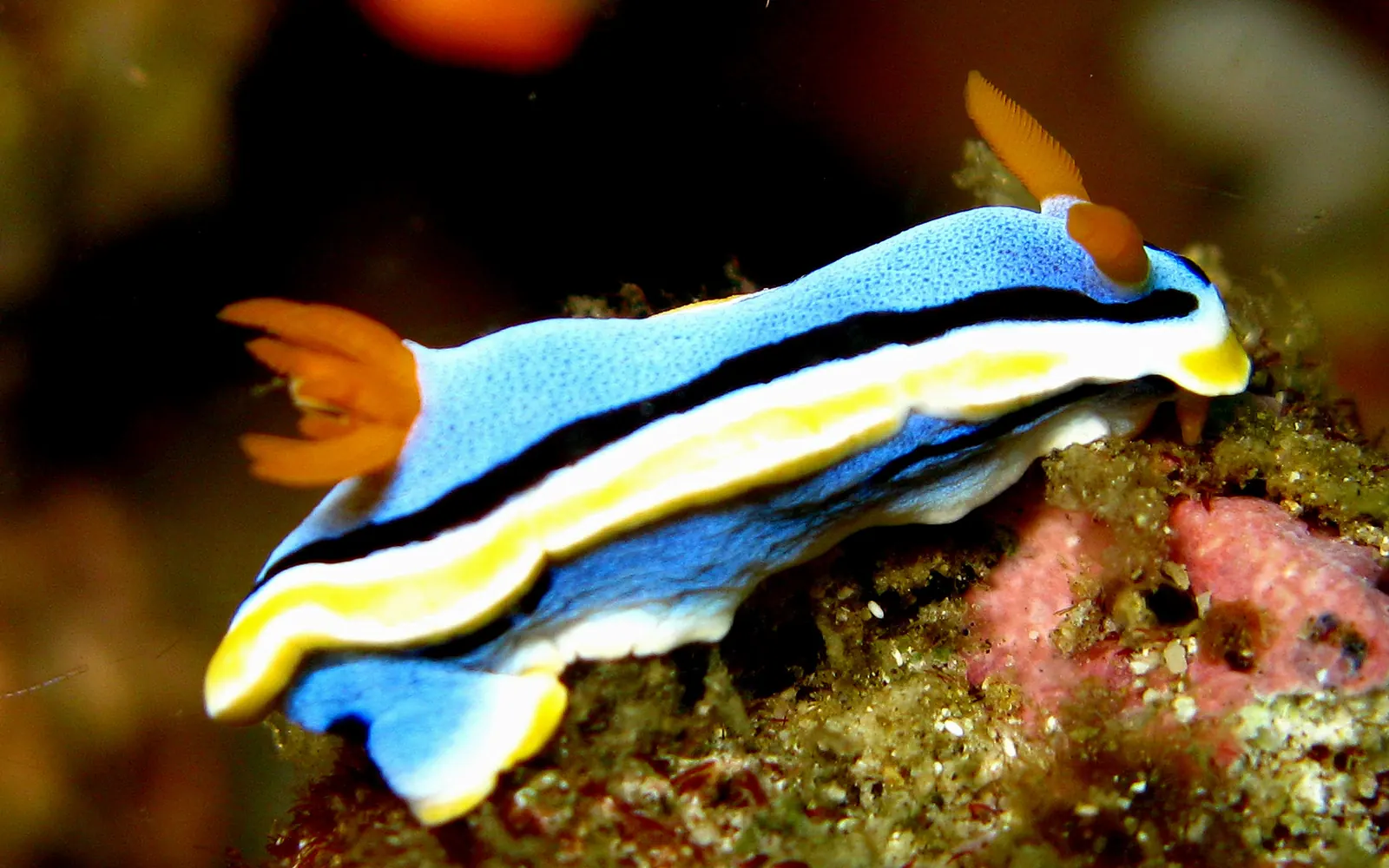
Choose North Sulawesi for Lembeh muck diving, Bunaken's walls and more named itineraries, reached through Manado's international airport and the harbour at Bitung. Choose Southeast Sulawesi for the Wakatobi reefs, reached through Bau-Bau or, for resort guests, a flight from Bali. No published trip we have read joins Lembeh with Wakatobi, so plan them as separate journeys.
How far apart are the two regions, in travel terms?
Far enough that you should treat them as two different trips. Bitung, the working harbour of the north, sits at the island's north-eastern edge. The Wakatobi group lies well to the south, with the Banda Sea on one side and the Flores Sea on the other, according to Wikipedia. UNESCO explains that the name is an acronym of its four main islands, Wangi-Wangi, Kaledupa, Tomia and Binongko, in the Tukang Besi Archipelago.
A connection time and a dated domestic airfare would help, and neither is published, so compare the shape of each journey:
| Step | North Sulawesi | Southeast Sulawesi |
|---|---|---|
| Airport | Sam Ratulangi International (MDC), Manado | Betoambari (BUW) near Baubau, or Matahora (WNI) on Wangi-Wangi, both domestic |
| Where the boat waits | Bitung, on the operators' pages we read | Bau-Bau on Buton, commonly, according to Neptune's guide |
| First dives | Lembeh Strait is beside the harbour | After an overnight sail from Bau-Bau, according to the same guide |
| Other way in | Crossings from Sorong or Ternate | The resort's guest flight from Bali, or a trip up from Alor |
How do you reach each one?
The north is the simpler arrival. Sulawesi.com treats Manado and Makassar as the two ways in from abroad, and Manado's airport is Sam Ratulangi (MDC). From the airport you go by road to the boat at Bitung; our routes page shows which trips start there.
The southeast has three doors, and which one you use depends on what you book:
- Baubau. Betoambari Airport is a domestic airport near the town, on Buton. It suits boat trips that begin at Bau-Bau. The two spellings appear in different sources and mean the same place.
- Wangi-Wangi. Wikipedia describes Matahora Airport as the main gateway to the regency. It is also domestic, so expect a connection from a larger Indonesian airport.
- The resort flight. Wakatobi Dive Resort says guests fly from Bali to its own airstrip, a trip of under three hours that generally runs on Mondays and Fridays. Its Pelagian yacht is tied to the same resort, but ask whether a yacht booking includes that flight rather than assuming so.
In practice, the north asks less of your itinerary if you have a short window or an international connection that cannot be moved. The southeast rewards people who can build in a day on each side of the trip.
How does the diving differ?
The north gives you two opposite styles within reach of each other. Muck diving, as Wikipedia defines it, takes place over loose sediment, and visibility is usually on the low side. Lembeh is the region's reference point for it. Mermaid's Lembeh page mentions mimic octopus, hairy frogfish, blue-ringed octopus and flamboyant cuttlefish. Neptune's guide contrasts the two sites directly: Bunaken is big scenery and clear water, Lembeh is black sand and very small animals. Neptune puts Bunaken's visibility at often 25 to 35 metres. That is an operator's description, not a measurement.
The southeast is described in the sources by its reefs and its depth. Wikipedia records water in the park reaching 1,044 metres at its deepest. UNESCO records about 590 fish species and 396 coral reef species, and sellers print higher figures, as the species section below shows.
Water temperature is one measurable difference. LiveAboard.com says Lembeh sites typically sit at 26 to 30°C. Wakatobi Dive Resort gives 25 to 30°C for its area, cooling to 25 to 27°C between June and October. If you feel the cold, ask the operator what exposure protection its guests use in those months.
The style of boat differs too. In the north, the published itineraries tend to be long, moving trips between island groups. In the southeast, Neptune's guide frames the boat's advantage as range across the four main islands, while a resort trades that range for a bed on land. Neptune sells boats, so read that framing with its source in mind.
Which Wakatobi sites do guides name, and who are they for?
Dive The World, an agency that sells these trips, counts more than 50 sites and suggests 7 to 11 days. It grades several of them by current, which helps a diver judge the southeast against Lembeh. The notes below are its descriptions. Several distances on its page run from the Waha and Hoga piers, so some sites may suit day boats better than a liveaboard. Ask which of them your boat plans to dive.
| Site | Where | Dive The World's note |
|---|---|---|
| Roma | Off the north-west tip of Tomia | A pinnacle rising to about 2 metres at low tide, with banded sea snakes common |
| Cornucopia | Not located on the page | Walls, ledges and overhangs, usually drifted |
| Hoga Channel | Between Hoga and Kaledupa | Barracuda at 10 to 20 metres; fairly strong current, certified divers only |
| Ali Reef | Near Waha pier, Tomia | Trevally over a pinnacle; strong current, experienced divers only |
| Outer Pinnacle | North of Hoga | Fan corals and macro subjects; strong current, intermediate divers |
| One Melangka Beach | About 60 metres off a white sand beach | Shallow coral that also suits snorkelling; all levels |
Why do species counts for Wakatobi differ so widely?
Nobody publishing these figures explains how they were counted, so they cannot be reconciled. UNESCO records about 590 fish species and 396 coral reef species. LiveAboard.com gives some 700 fish and 400 coral species. Wallacea Dive Cruise prints 900 fish and 700 coral species in one paragraph and 942 fish and 750 coral species in the next. UNESCO is the only one of the three with no trip to sell, so we quote its figure and show the others beside it. None of these numbers tells you what you will see on a given dive, and a higher count on a seller's page is no reason to pick that seller's boat.
How do the calmer months compare?
Sources disagree, so here is each one under its own name. None of this is a forecast.
| Area | Source | Calmer period it names |
|---|---|---|
| Lembeh | LiveAboard.com | Diveable year-round; roughly April to November calmer |
| Bunaken | Neptune Liveaboards | May to October dry season; March to May and September to October as sweet spots |
| Wakatobi | Neptune Liveaboards | Roughly March to May and September to November; southeast trade winds about June to August |
| Wakatobi | LiveAboard.com | Roughly April to October |
| Wakatobi | Wakatobi Dive Resort | Diving runs all year |
The sharpest disagreement sits in the Wakatobi rows. LiveAboard.com treats June to August as part of the calm season, and Neptune flags those months for trade winds. If your dates fall there, ask the operator about the specific crossing from Bau-Bau, because an open sail and a sheltered reef feel very different in the same wind.
If you want a window that both of Neptune's guides favour, March to May and September to October appear in each. That is one company's view of two regions, so test it against our guide to when to go before you fix dates.
What do published fares look like in each?
They do not line up, and this page's price table shows why. It mixes a per-person trip fare on a 12-day northern route, two Neptune trips on different years and lengths, a per-night Pelagian rate with its activity package charged separately, and a marketplace range for Wakatobi. Dividing one by another would produce a number that means nothing.
Read each row for its basis first. Check the cabin type, whether the figure is per person or per night, and the sailing year. One Neptune row prints a single-cabin figure below the shared one. Check its units on Neptune's page and do not plan from it.
Fares are also only part of the bill. Neptune's guide lists what its Wakatobi fares leave out: park, port and environment charges, some fuel surcharges, rented gear, alcohol and tips. The same guide says Wakatobi rates changed under the 2024 tariff regulation and warns that figures quoted locally may lag behind, without giving a current one, so get the amount from the operator in writing. Our page on marine park fees sets out what is known for the north.
Capacity may matter on the resort's yacht. The resort says its 36-metre yacht Pelagian will carry fewer people from the 2027 season, six guests in three cabins, down from ten in five. Older descriptions of it may be out of date.
Can one trip cover both?
The itineraries on our routes page do not join Lembeh with Wakatobi. Dancing Wind comes closest on the map, describing 11 days from Bitung to Kendari on the south-east side of the island, and its page does not name Wakatobi. The published crossings connect North Sulawesi eastward with Halmahera and Raja Ampat. The published way into Wakatobi from elsewhere comes from the south, on Neptune One's Alor trip. If you have seen a trip that does both, send us the operator's page; it would change this answer.
Doing both therefore means two bookings and a domestic link between them. Build in the surface interval before you fly, using our page on flying after a liveaboard, and allow for a missed connection between two boats that will not wait for you. Our page on combining Sulawesi routes goes through sequences that are simpler to build.
Which region fits which trip?
Use this as a first filter, then check the specific boat against our questions for operators. The Sulawesi liveaboard guide also covers the Togians and Sangihe, which sit outside this comparison.
- North, if macro life is the point, you want an international flight into the region, or you are weighing a resort week against a boat. Neptune, a boat operator itself, says Bunaken does not need a boat.
- North, if you want a long moving trip to Sangihe, the Togians or Halmahera from one harbour.
- Southeast, if reefs matter more than critters, you can absorb a domestic connection, and you accept fewer named itineraries to choose from.
- Southeast, if a resort base with a yacht option appeals, and the flight schedule fits your dates.
If you ask our desk to look into a region, the only document that binds anyone is a written offer, and you should weigh it as you would an offer from any operator, since a group company may be the one issuing it.
Which published prices did we check?
Published fares, marketplace ranges and operator add-ons, each with its source and the month we checked it. These are not our offers. Fares and fees change, so check the source before you rely on a figure.
| Item | Published price | Source | Checked |
|---|---|---|---|
| King Neptune, Bau-Bau round trip, 8 nights, May and Sep 2028 (published fare) | US$6,200 shared; US$4,100 single cabin, per person | neptuneliveaboards.com | Nov 2026 |
| Neptune One, Alor to Wakatobi, 9 nights, 28 Aug 2027 (published fare) | US$3,750 to US$4,350 per person | neptuneliveaboards.com | Nov 2026 |
| Pelagian dive yacht, 2027, Superlux cabin, standard and holiday season (published, per person per night, activity package extra) | US$925 standard; US$1,065 holiday | wakatobi.com | Nov 2026 |
| LiveAboard.com, trips listing Wakatobi (marketplace range per trip) | €2,944 to €6,713 | liveaboard.com | Nov 2026 |
| La Galigo, Bangka, Lembeh and Sangihe, 12 days 11 nights from Bitung (published starting fare) | From US$6,410 per person | lagaligoliveaboard.com | Nov 2026 |
What other questions come up when choosing a region?
Is Wakatobi part of North Sulawesi?
No. Wakatobi is in Southeast Sulawesi, in the Tukang Besi Archipelago, while the Bitung and Lembeh harbour area is at the north-eastern edge of the island. The two regions use different airports and different starting ports.
Can I fly directly from Bali to the Wakatobi area?
Yes, if you are a guest of Wakatobi Dive Resort, which runs a guest flight from Bali to its own airstrip. For anything else, plan on a domestic connection into Betoambari or Matahora.
Which region is better for newer divers?
Neither by default, because requirements are set by each trip. Neptune calls Bunaken beginner-friendly, for example, but a northern boat trip may still be rated for experienced divers. Check the rating on the specific trip you are considering.
Do the published fares include park fees in both regions?
Not in the two published examples here. Neptune's guide says its Wakatobi fares exclude park, port and environment fees, and La Galigo lists marine park fees outside the fare on its northern trip. Ask for the amount in writing on any boat.
Does one region always cost less?
Not on this evidence. Published fares differ in length, sailing year, cabin and basis, and neither region has published price bands. Compare one dated trip with another after adding its extras, not one region with the other.
Which sources support this page?
- UNESCO: Wakatobi Biosphere Reserve
- Wikipedia: Wakatobi National Park
- Wikipedia: Sam Ratulangi International Airport
- Wikipedia: Betoambari Airport
- Wikipedia: Matahora Airport
- Wikipedia: Muck diving
- Sulawesi.com: top dive sites
- Neptune Liveaboards: Wakatobi liveaboard guide
- Neptune Liveaboards: Bunaken diving guide
- Neptune Liveaboards: Indonesia park fees and visa
- Mermaid Liveaboards: Lembeh
- La Galigo: Bangka, Lembeh and Sangihe trip
- Wakatobi Dive Resort, getting here
- Wakatobi Dive Resort: seasons
- Wakatobi Dive Resort: Pelagian
- Wakatobi Dive Resort, prices
- LiveAboard.com: Lembeh Strait
- LiveAboard.com: Wakatobi listing
- Dancing Wind: Sulawesi itinerary
- Dive The World: Wakatobi diving
- Wallacea Dive Cruise: Sulawesi itineraries
- LiveAboard.com: Sulawesi
- La Galigo: Sangihe, Bangka and Lembeh route
How do I reach the desk?
Tell the desk which region you lean towards and your travel month: WhatsApp +62 811-3941-4563 or bd@juaraholding.com. Your preferred cabin and your logged dive count help too.
Send the desk your region, dates, and group size. The desk replies in writing.
Ask the desk on WhatsApp bd@juaraholding.com