On this page
By Sulawesi Liveaboard Editorial Desk
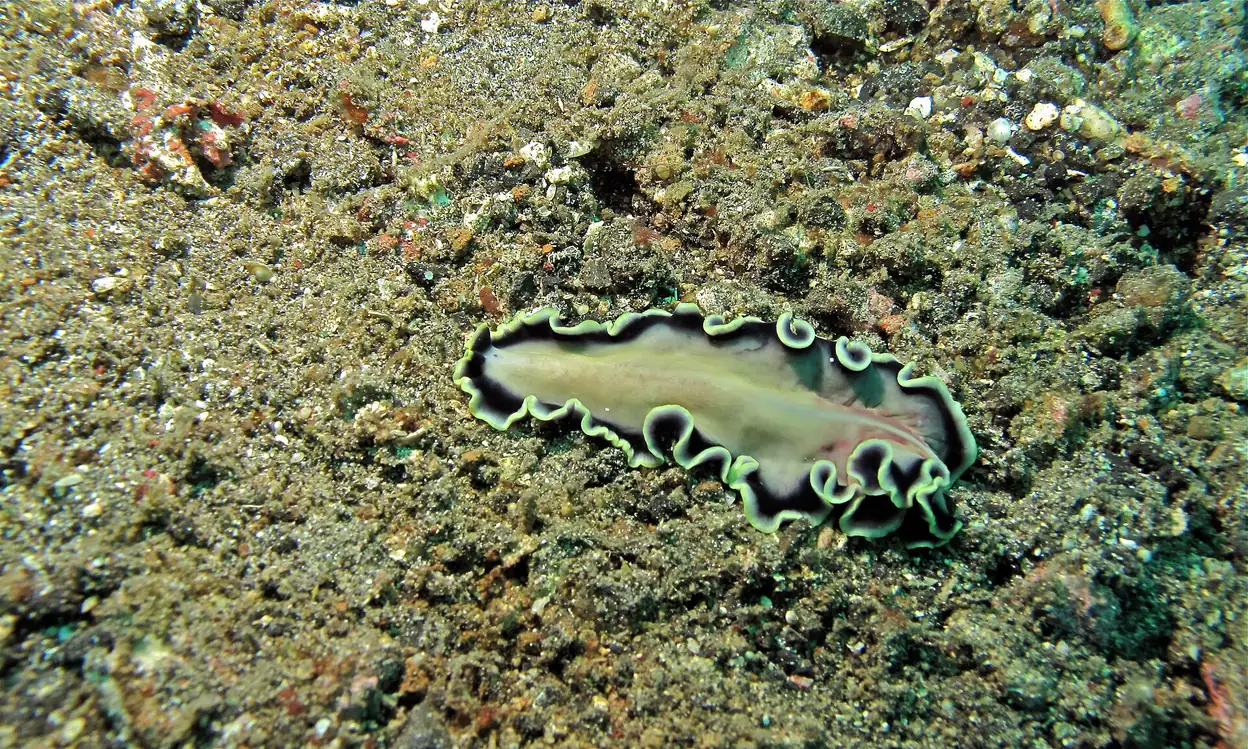
Bunaken and Lembeh offer different dives rather than better or worse versions of the same one. One operator guide sets them side by side: Bunaken for big scenery and clear water, Lembeh for black sand, roughly ten-metre visibility and very small animals. Choose by what you want to look at, how you handle low visibility, and the lens you carry.
How does the terrain differ?
Bunaken is a matter of depth and scale; Lembeh is a matter of looking closely at the bottom. Wikipedia gives sea depth between the Bunaken park islands as 200 to 1,840 m, and Neptune's guide talks of diving along the wall. The park takes in five islands: Bunaken, Manado Tua, Mantehage, Nain and Siladen. It covers 890.65 km², of which 97% is marine habitat, and about 390 coral species are recorded there.
Lembeh is a strait separating Sulawesi and Lembeh Island, with Bitung on its western side. Its reputation rests on muck diving, which Wikipedia defines as diving on a loose sedimentary bottom, usually in relatively low visibility. A Lembeh resort guide names TK, Hairball and Jahir as well-known black sand sites. You do not go there for a dramatic view of the reef. You go to examine a patch of sand with a guide who knows what lives in it.
| What to compare | Bunaken | Lembeh Strait | Source |
|---|---|---|---|
| Bottom | Reef and deep water between islands | Loose sediment and black sand | Wikipedia; Neptune guide |
| Depth figure | Sea depth of 200 to 1,840 m between islands | No comparable figure; ask your guide about each site | Wikipedia |
| Reported visibility | Often 25 to 35 metres | Roughly ten metres | Neptune guide, not official measurements |
| After heavy rain | No figure in these sources | Can fall to around 4 metres | LiveAboard.com |
| Currents | Usually gentle, with downwellings to respect | Mostly mild | Neptune guide; LiveAboard.com |
| Subject size | Big scenery | Very small animals | Neptune guide |
For a boat traveller, there is also a difference in how many trips use each place. LiveAboard.com listed 5 liveaboards under Bunaken and 22 under Lembeh Strait in November 2026. A listing count is not a departure count, but the gap fits a practical fact: a trip that names one of these places does not always name the other. Read what each published trip actually covers on the Bunaken and Lembeh page.
How does visibility differ?
By a wide margin, if you accept the sources for what they are. One operator guide says Bunaken visibility is often 25 to 35 metres, and the same guide gives roughly ten metres for Lembeh. LiveAboard.com adds that Lembeh can fall to around 4 metres after heavy rain, and says roughly April to November brings better visibility there. These are guide statements and not measurements taken on any given day.
Low visibility means different things at each site. At Lembeh it is part of the deal, because the subject is close to your mask, and you might not notice what lies further off. At Bunaken a murky day takes away the very thing you came for. So when you plan, ask what a bad day would cost you. In our reading, a poor-visibility day on a wall loses the view. The same day on black sand may cost you very little, as long as your buoyancy keeps the silt down.
Season matters to both places, though not in the same way. LiveAboard.com describes Lembeh as diveable year-round because it is sheltered. For Bunaken's calmer months, and how they line up with the wider region, see the month-by-month page.
What will you see at each?
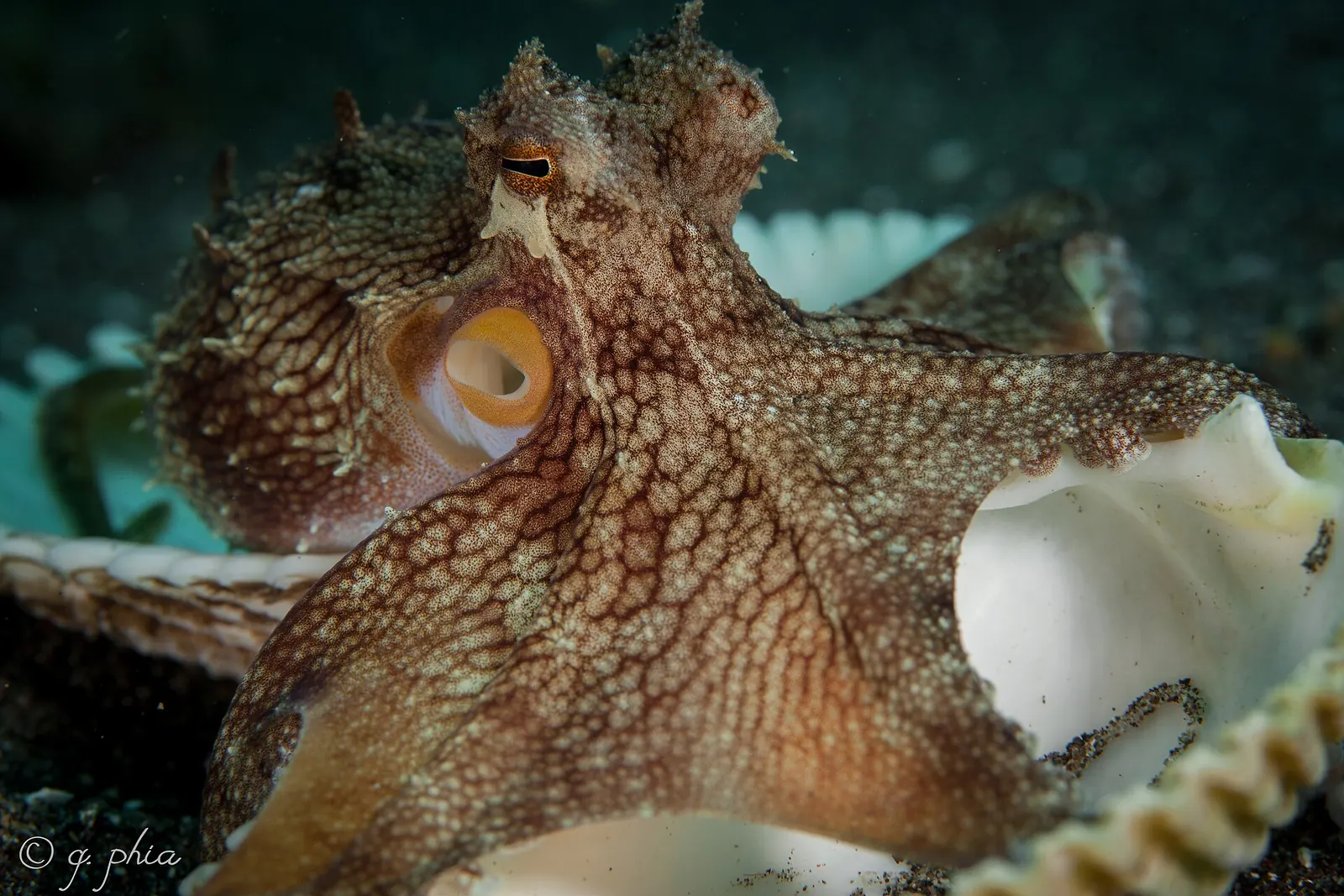
At Lembeh, the short list is what draws people. Mermaid names hairy frogfish, mimic octopus, flamboyant cuttlefish and blue-ringed octopus, and a Lembeh resort guide notes the Banggai cardinalfish at Nudifalls. These are operator lists, and no boat can promise you any particular animal on any particular dive. The search is the activity, and you depend on your guide's eye.
At Bunaken, the attraction is the setting, and the sources cited here give no animal list to match Lembeh's. Bluewater also names a wreck for those qualified for it, putting the Molas Wreck at about 24 to 40 metres and saying it is most suited to advanced divers.
Water temperature will not separate them much for planning purposes. LiveAboard.com gives 26 to 30°C for Lembeh sites. No park-specific figure for Bunaken appears here, so ask your operator before packing a thinner suit.
Which named sites do operators list at each?
Named sites let you ask a sharper question than "do you dive Bunaken?". These come from LiveAboard.com and from the Lembeh resort guide cited above, and neither is a promise that a boat will stop there. LiveAboard.com also counts some 60 sites in Lembeh, so the list is a start and not a menu.
| Area | Site | What the source says | Source |
|---|---|---|---|
| Bunaken | Celah Celah | A wall with deep cracks that give shelter from current | LiveAboard.com |
| Bunaken | Sachiko's Point | A wall drift, with 301 fish species recorded | LiveAboard.com |
| Lembeh | Hairball | Shallow, with graphite-black sand discoloured by volcanic ash | LiveAboard.com |
| Lembeh | TK, Jahir | Well-known black sand sites | Lembeh Resort |
| Lembeh | Nudifalls | Noted for the Banggai cardinalfish | Lembeh Resort |
Put two or three of these into your first message to an operator, and ask which it would use on your date, in what order and at what certification level. A reply that names sites and depths tells you far more than one that repeats the area name. LiveAboard.com's species count for Sachiko's Point has no stated method, so read it as a sign of variety only.
Which suits newer divers?
Either can, for different reasons, and the operator's own rules come first. Neptune's guide calls Bunaken beginner-friendly, with currents usually gentle, and tells newer divers to stay near the wall and near their guide because of downwellings. LiveAboard.com describes Lembeh's currents as mostly mild. Current alone does not settle this, so ask the operator about your level.
The challenge differs. In our reading, and not from a source, a wall has deep water beneath you and no bottom to orient by, so depth control is the skill being tested. Muck has a bottom close by that is easily stirred up, so fine buoyancy is what counts. By the same reasoning, a diver who is still working on buoyancy will see less at Lembeh and spoil the view for everyone behind them. Both places have the same general warning: LiveAboard.com says currents in Sulawesi can strengthen quickly and switch direction within one dive at some sites.
A published route can also be harder than either site suggests, because it may add remote stops. Operators' own entry rules are collected on the experience requirements page.
Which camera setup suits each?
Our reading is wide-angle for Bunaken and macro for Lembeh, and it follows directly from the contrast the Neptune guide draws. Big scenery in clear water fills a wide lens. Very small animals on sand need a macro lens and a steady approach. We are not citing any published lens recommendation here, and it is your subject that should decide.
| Your priority | Lean towards | Why |
|---|---|---|
| Reef scenes and divers in blue water | Bunaken, with a wide lens | The reported visibility and depth favour it |
| Small subjects and behaviour | Lembeh, with a macro lens | Subjects are close, and low visibility matters less |
| Both on one trip | Check the itinerary first | You can only shoot what the boat visits, and one housing and port setup may not suit both |
| Working on images between dives | Ask about facilities | Bluewater says Lembeh Resort has a dedicated photo centre; that is a resort facility, so ask a boat what it has |
More on boats and small-subject work is on the macro photography page, and the wider choice of region is in our Sulawesi liveaboard guide.
What do readers ask when choosing between them?
Is Lembeh worth it if I dislike low visibility?
Probably not as the main goal of a trip. Neptune's guide gives roughly ten metres there, and LiveAboard.com says around 4 metres after heavy rain. If open water and scale are what you enjoy, the description of Bunaken fits you better.
Can newer divers dive Bunaken?
Yes, according to one operator guide, which calls it beginner-friendly with usually gentle currents. The same guide tells newer divers to stay near the wall and their guide because of downwellings, and a given boat may set its own minimum.
Do I need a liveaboard for either?
No. Neptune, itself a liveaboard operator, tells Bunaken visitors they can skip the boat, and Bluewater says resorts work well for Lembeh and Bunaken. A boat earns its place when you want to add other areas to the same trip.
Which has more coral species?
No comparison is possible. Wikipedia records about 390 coral species in Bunaken National Park, with no matching count for Lembeh here. Coral count is also a poor way to choose, because Lembeh is not visited for its coral.
Are the currents stronger at Bunaken?
Not on the published descriptions. Neptune's guide calls Bunaken's currents usually gentle, and LiveAboard.com calls Lembeh's mostly mild. Neither figure is a measurement. Conditions at individual sites differ, so ask your guide at the briefing before each dive.
Which sources support this page?
- Wikipedia: Bunaken National Park
- Wikipedia: Lembeh Strait
- Wikipedia: Muck diving
- Neptune Liveaboards: Bunaken diving guide
- LiveAboard.com: Lembeh Strait
- LiveAboard.com: Bunaken
- LiveAboard.com: Sulawesi
- Mermaid Liveaboards: Lembeh
- Lembeh Resort: diving in North Sulawesi
- Bluewater Dive Travel: North Sulawesi guide
- Bluewater Dive Travel: diving in Indonesia
How do I reach the desk?
Say which of these dives you most want, your logged dives and any camera plans. If you have a trip in view, include its name, and we will say what we can confirm about its stops.
WhatsApp +62 811-3941-4563 or email bd@juaraholding.com.
Send the desk your region, dates, and group size. The desk replies in writing.
Ask the desk on WhatsApp bd@juaraholding.com